Tree Removal
Tree Removal Services in Charlotte NC
Trees add incredible value to properties across Charlotte NC, but when a tree becomes unsafe, diseased, or damaged beyond repair, removal becomes necessary. Adonai Tree Services provides professional tree removal services designed to protect surrounding structures, maintain landscape safety, and eliminate hazardous conditions. With extensive knowledge of local tree species and regional weather challenges, the team approaches each removal with accuracy and respect for the property while prioritizing safety from start to finish.
Understanding When Tree Removal Is Necessary
Tree removal is not always the first solution, but certain conditions require immediate action to prevent additional damage. Recognizing the early warning signs helps property owners address potential hazards before they escalate. Over time, severe storms, root decay, and excessive leaning can cause structural instability that no pruning or trimming can correct. In other cases, a tree may interfere with utility lines, construction plans, or driveway expansions where removal is the only viable option.
Common Situations That Call for Removal
Property owners often reach out when tree roots interfere with foundations or sidewalks. Excess leaning toward a house or street creates a risk of falling branches or total collapse during strong winds. Hollow or decaying tree trunks indicate structural weakness that cannot be reversed. Large dead branches near rooftops or outdoor living areas threaten to break unexpectedly. Severe disease or fungus spreading to nearby vegetation may require removing the affected tree before it impacts the entire landscape.
Safety Hazards That Should Not Be Ignored
Branches overhanging rooflines can damage shingles and gutters while attracting small animals that create nests in attic spaces. Trees positioned too close to driveways and utility poles may limit visibility or cause electrical disruptions during storms. Aging trees with visible trunk cracks or mushrooms growing around the base often signal internal decay, making them unpredictable during periods of heavy rain or wind. Trees situated on steep slopes can shift over time, increasing the chance of sudden uprooting.
The Tree Removal Process from Start to Finish
Removing a tree safely requires a well-structured process tailored to the tree’s size, location, and condition. Adonai Tree Services follows industry-recognized practices to ensure the work is completed efficiently with minimal disruption to surrounding areas. Every removal begins with a property evaluation to determine the safest plan of action. Equipment selection depends on height, diameter, and access limitations, whether cranes or climbing techniques are required.
Steps Involved in Professional Removal
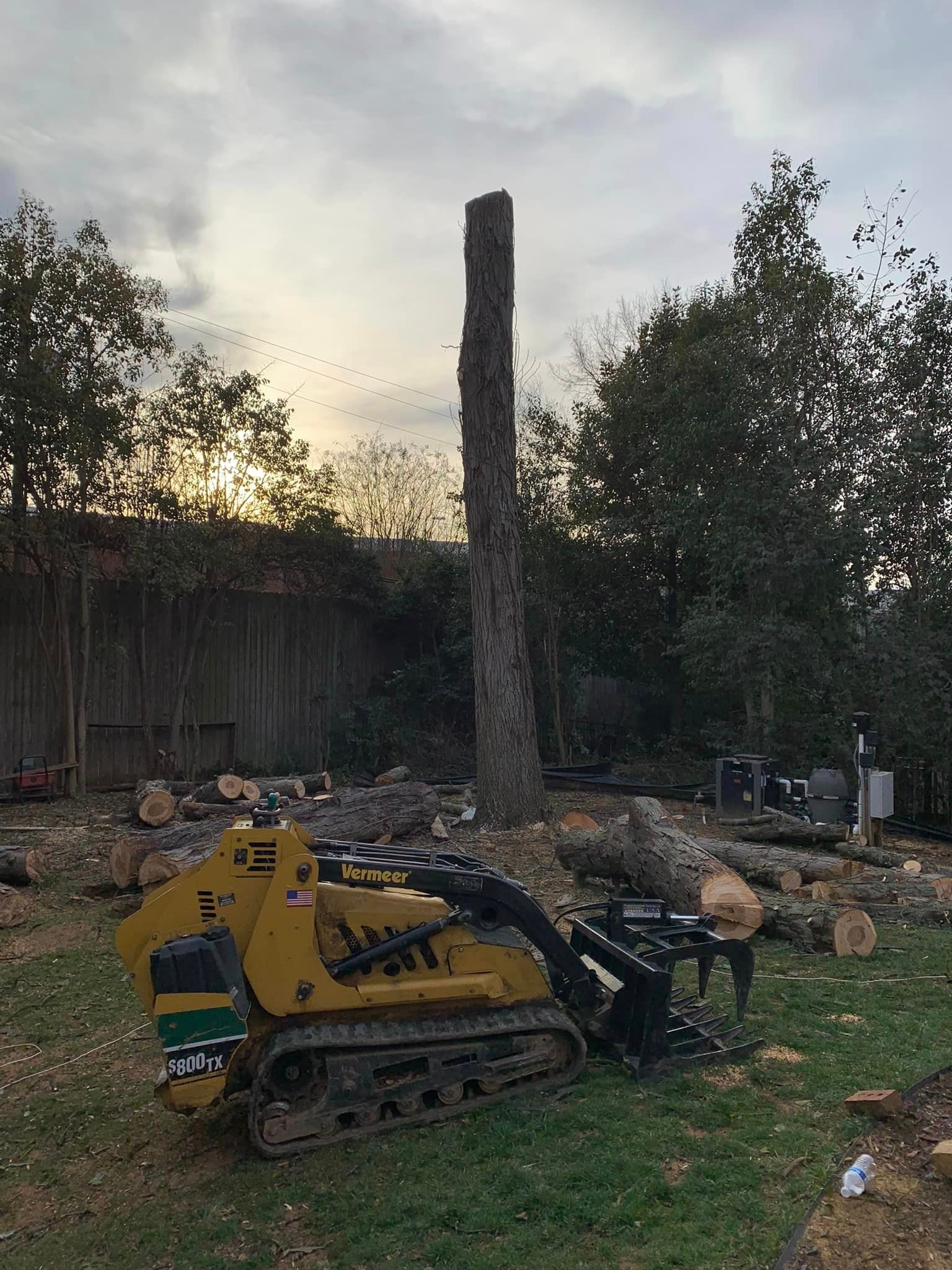
An on-site inspection determines structural weaknesses and branch distribution. A removal strategy is developed to control how each portion of the tree comes down. Protective measures are placed to safeguard windows, fences, and nearby vegetation. Large limbs are carefully removed first to reduce weight stress on the trunk. The main trunk is sectioned and lowered in controlled segments to avoid impact on the ground or nearby structures. Clean-up follows immediately after removal to leave the area clear of debris.
Handling Restricted Access Situations
Some trees stand close to homes, garages, or tight spaces that require precise dismantling rather than traditional felling. In these instances, ropes and climbing gear allow controlled descent of each cut section. Work in confined yards requires extra care to maintain the stability of surrounding soil and landscaping features while preventing accidental contact with nearby fences, patios, or air conditioning units. Even in challenging placements, the structured approach ensures safety remains the priority.
Protecting Surrounding Property During Tree Removal
Managing potential damage plays a key role in successful removal, especially in the neighborhoods and business districts of Charlotte NC where space may be limited. Adonai Tree Services uses seasoned techniques to protect lawns, garden beds, and paved surfaces while working around complex landscapes. The goal is not only to complete the removal but to maintain property aesthetics throughout the process.
Techniques Used to Minimize Landscape Disruption
Drop zones are planned carefully to avoid impact on the ground. Branches are lowered by rope instead of being allowed to fall freely. Ground mats or boards are placed under equipment to prevent soil compaction and protect turf in high-traffic areas. If heavy equipment is required, strategic placement ensures driveways and walkways remain safeguarded. Sawdust and small debris are collected promptly to reduce clean-up time and preserve yard appearance.
Managing Tree Removal Near Structures
When trees are located close to homes or offices, careful rigging ensures branches stay clear of siding, gutters, and windows. Precision cutting prevents sudden shifts in trunk weight that could lean toward a structure. The removal plan accounts for wind direction and branch distribution to maintain control throughout the cutting process. Once complete, the cleared area provides space for future landscaping updates or new construction.
Addressing Stumps and Surface Restoration After Removal
Tree removal often leaves behind stumps that interfere with landscaping plans or future planting. Homeowners and commercial property managers in Charlotte NC frequently request stump grinding following removal to maintain a uniform surface. While stump handling is a separate service, it often complements tree removal to complete the restoration of the area.
Why Stump Management Matters
Exposed stumps attract pests such as termites and carpenter ants. They create tripping hazards in grassy areas where foot traffic is common. Stumps may also regrow sprouts if not properly treated, leading to unwanted regrowth. Grinding the stump below soil level prepares the ground for sod, garden expansions, or decorative landscaping features without obstruction.
Supporting Healthy Landscapes After Tree Removal
Removing a tree creates opportunities to shape the landscape with new growth and improved safety. Property owners often use the additional space to introduce native trees better suited to Charlotte NC’s climate or to expand outdoor recreational areas. By clearing hazardous or decaying trees, the remaining vegetation receives more sunlight and airflow, encouraging healthier growth patterns throughout the yard.
Planning Future Landscaping
Improved spacing allows younger trees to thrive without competing for light or water. Expanded lawn areas provide room for play areas, patios, or garden beds that enhance property value. Thoughtful planning after removal ensures the landscape continues to evolve naturally while reducing the risk of future hazards.